Every marketer who considers running an incentivized campaign hits the same objection, often from inside their own head. Offering someone a reward to take a meeting feels like it should cheapen the interaction. It feels like paying someone to fake interest in your product. It feels, in a word, like a bribe.
Look closer at what a bribe actually is, and the incentivized meeting doesn't qualify. A bribe influences a decision after the fact, in secret, in exchange for something the person otherwise would not do. An incentivized meeting works differently. It's offered upfront. It's disclosed. And it isn't attached to an outcome like buying a product or signing a contract. It's attached to an input: a prospect's time.
That distinction is the whole psychology of the channel.
Every professional relationship already prices time
Lawyers bill by the hour. Consultants quote day rates. Executive coaches charge per session. In nearly every professional context, time has an explicit price before a single word is exchanged. The one place this norm breaks down is cold B2B outreach, where a stranger is asked to give up thirty minutes of a working day with nothing offered in return but the hope that the pitch will be good enough to justify the interruption.
An incentivized meeting simply restores the norm. It says we know your time has value, and we're naming that value before we ask for it, rather than implying we'll make it worth your while and hoping you take our word for it.
Reciprocity, not manipulation
Behavioral scientists have studied the reciprocity principle for decades. When someone gives you something first, you feel a pull to give something back. Critics of incentivized meetings assume this pull is what makes the tactic manipulative, as if the gift card is engineered to override a prospect's judgment.
That reading gets the mechanism backwards. Reciprocity isn't a trick that bypasses judgment. It's a norm that governs every healthy exchange, professional or personal. A business that moves first, offering something of clear value before asking for anything, isn't exploiting a bias. It's opening the relationship the way a good relationship should open. With a gesture, not a demand.
The real filter isn't the incentive. It's what surrounds it.
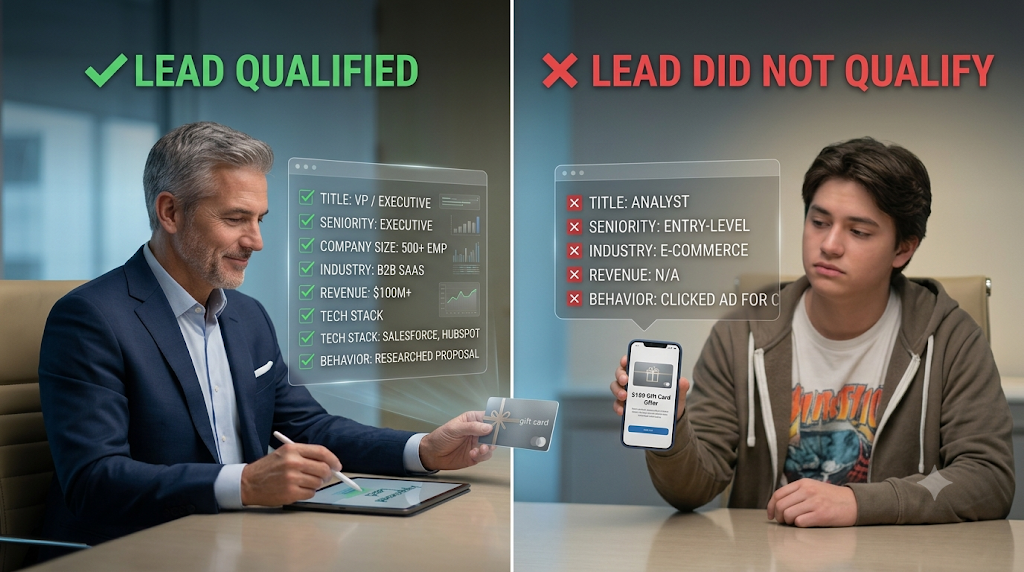
Where incentivized campaigns actually go wrong has nothing to do with the reward itself. It's what happens before the meeting is booked. A gift card attached only to a demo pitch attracts anyone who wants the reward, with no way to separate the qualified buyer from the curious bystander. That's the version that earns the bribe label, and fairly so, because the incentive is doing all the work the messaging should be doing.
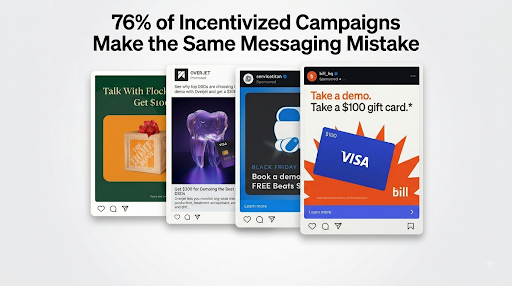
The fix isn't removing the incentive. It's building qualification around it. When a campaign leads with the value of the meeting itself, a custom analysis, a benchmark, a working session, rather than the product, the incentive becomes reinforcement of a decision the prospect was already inclined to make. Our review of active incentivized campaigns on LinkedIn found that only about a quarter currently take this approach. The rest still lead with the product and let the reward carry the offer alone, which is exactly the pattern that earns the skepticism.
Why this is accelerating, not fading
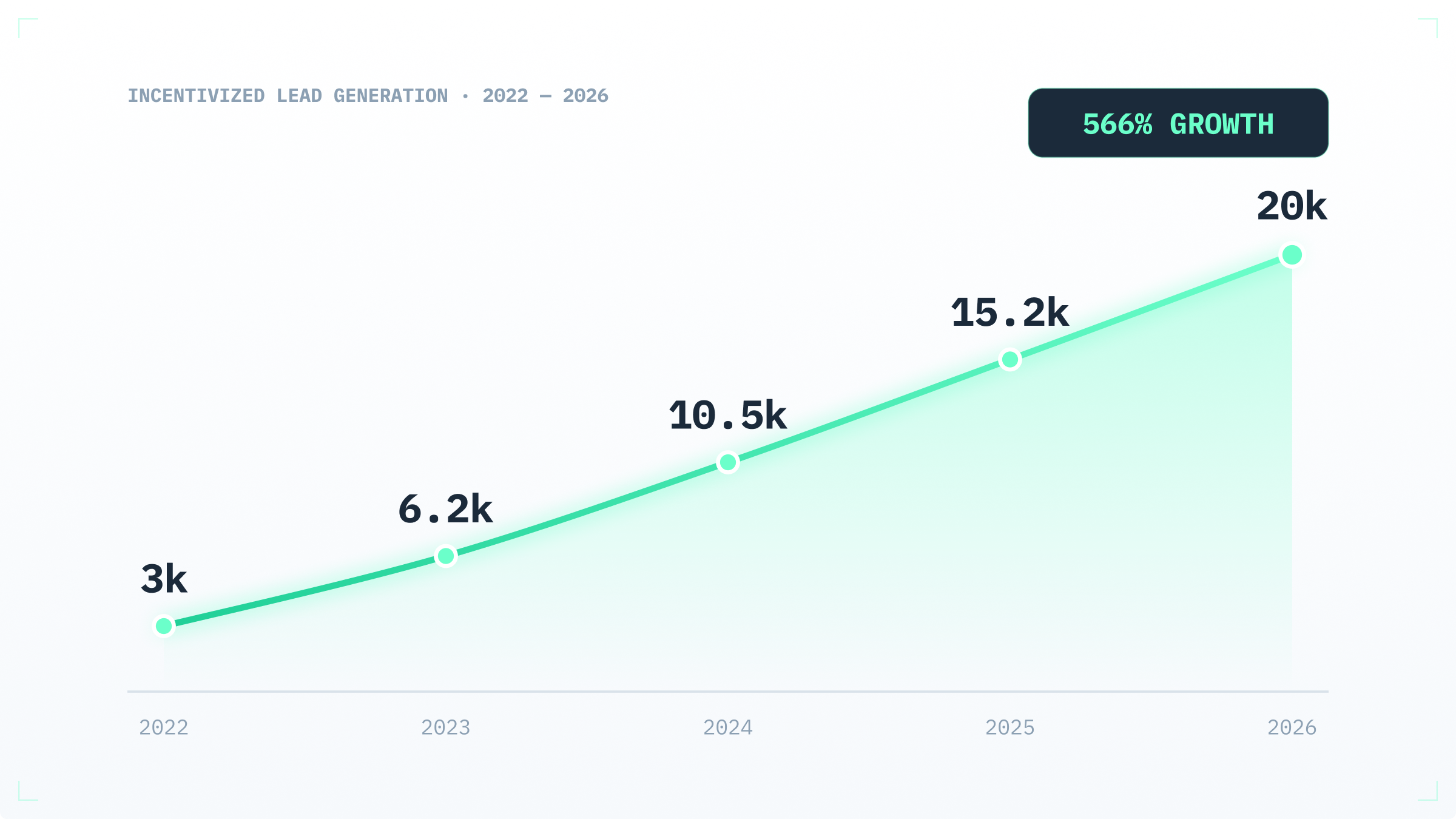
If incentivized meetings were simply a manipulation tactic, the market would be punishing it. Instead, the opposite is happening. The number of incentivized demo campaigns running on LinkedIn has grown more than fivefold since 2022, and the companies driving that growth are not fringe advertisers cutting corners. They're established, well-funded B2B brands making a deliberate strategic choice.
That's the tell. A tactic that genuinely felt like a bribe to the buyers on the receiving end would not be scaling this fast among the most sophisticated demand generation teams in B2B. It's scaling because, done well, it doesn't feel like a bribe. It feels like being taken seriously.
The reframe that matters
A bribe hides its motive and hopes you don't notice. An incentivized meeting states its terms and lets the prospect decide. That's the entire difference between manipulation and respect. Once qualification, messaging, and follow-through are built around the incentive, rather than left to carry the offer alone, the gift card stops being the reason someone takes the meeting. It becomes the moment a business proves it already understood the exchange it was asking for.
If you're building that layer into your own campaigns, qualification, meeting-centric messaging, and the incentive itself working together, that alignment is where we spend most of our time at SweepLift.