Most teams spend their energy on the parts of a campaign they can see. The creative. The headline. The gift card itself. Those are the pieces that get reviewed in a meeting, argued over in Slack, and tested against each other in a dashboard.
But the decision that actually determines whether a campaign succeeds gets made earlier than any of that, before a single ad impression is served. It's the answer to one question: who is this offer going to?
Incentives don't discriminate. Targeting has to.
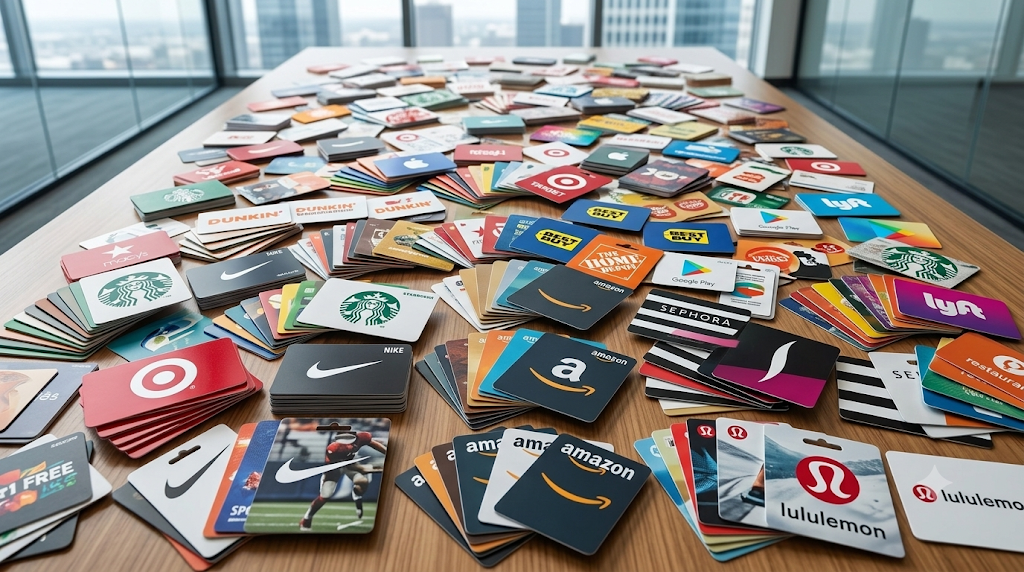
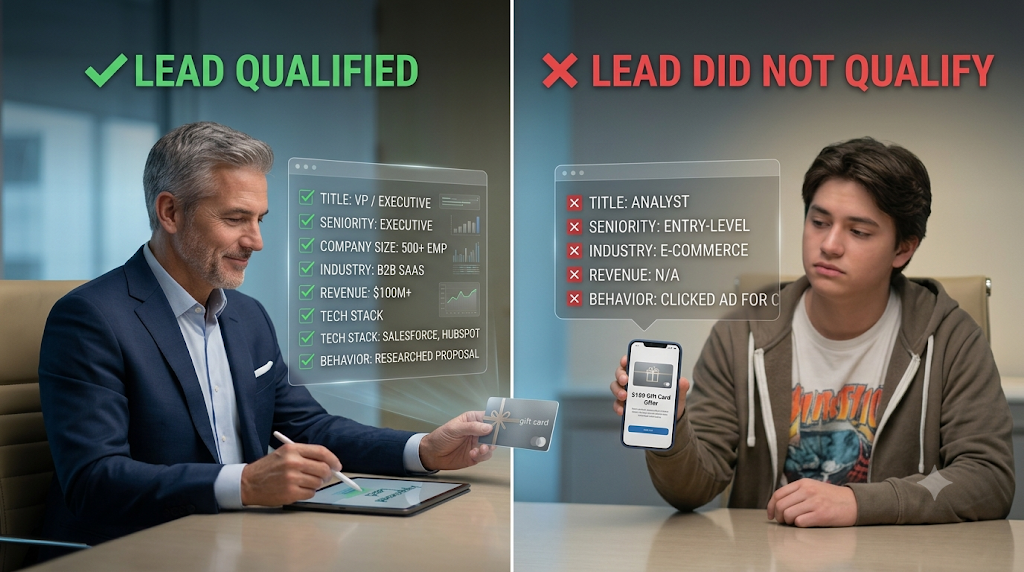
A gift card is a blunt instrument. It doesn't know the difference between a VP with budget authority and someone who clicked because they wanted a $100 Amazon card. It rewards attention, not qualification. Left on its own, an incentive will attract everyone it reaches in equal measure, and that is precisely the problem. The gift card was never built to filter. Something upstream of it has to do that job.
That something is targeting precision, and it's why ICP targeting isn't a performance optimization sitting alongside creative and copy. It's the foundation the entire qualification system is built on. Every stage that comes after it, the survey flow, the lead scoring, the sales intelligence handed to reps, is only as good as the audience it's working with. Narrow, well-defined targeting means those later stages are refining a pool that was already close to right. Loose targeting means they're trying to filter a pool that should have been smaller from the start.
Job title is the beginning, not the definition
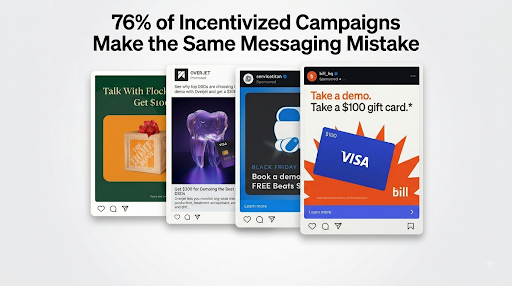
Plenty of incentivized campaigns already segment by persona at the creative level. "Hey CFOs." "Hey IT leaders." "Hey HR." That's a real signal that the market understands targeting matters. But a headline aimed at a title is not the same as a backend audience built around one.
Effective ICP targeting combines title with seniority, company size, industry, revenue range, technology stack, and whatever behavioral signals point to genuine fit. The goal is to build the tightest possible audience definition before the incentive ever enters the picture, so the gift card is doing its job among people who already belong there, rather than compensating for loose targeting by reaching everyone and hoping the survey catches the mismatch later.
There's a security dimension too
Precision targeting isn't only about lead quality. LinkedIn and Meta both maintain public ad libraries, which means anyone with an account, including competitors and incentive hunters, can find an active campaign, study the offer, and click through with no intention of ever being a real prospect. Some of this traffic is manual. Some of it is automated. Either way, a campaign with no targeting discipline and no fraud protection is exposed before it has run for a single day.
Tight targeting narrows who can find the campaign in the first place. Fraud protection handles the rest. Together, they mean the people entering the funnel are the people the campaign was actually built for, not the widest possible audience an ad platform is willing to serve.
The campaign is already decided before the creative is built
By the time a team is choosing between two headline variants or two incentive types, the outcome of the campaign has largely already been set. A precisely targeted campaign with mediocre creative will still reach the right people and generate a reasonable qualification rate. A loosely targeted campaign with brilliant creative will still flood the funnel with people who were never going to convert, no matter how good the survey flow or lead scoring behind it is.
That's the case for treating targeting as the first decision, not a step to configure after the campaign is otherwise ready. Everything downstream depends on getting this one right first.
If you're building that targeting architecture, title, seniority, company size, industry, revenue range, and technology stack configured before a campaign launches, that's the first decision we help clients get right at SweepLift.