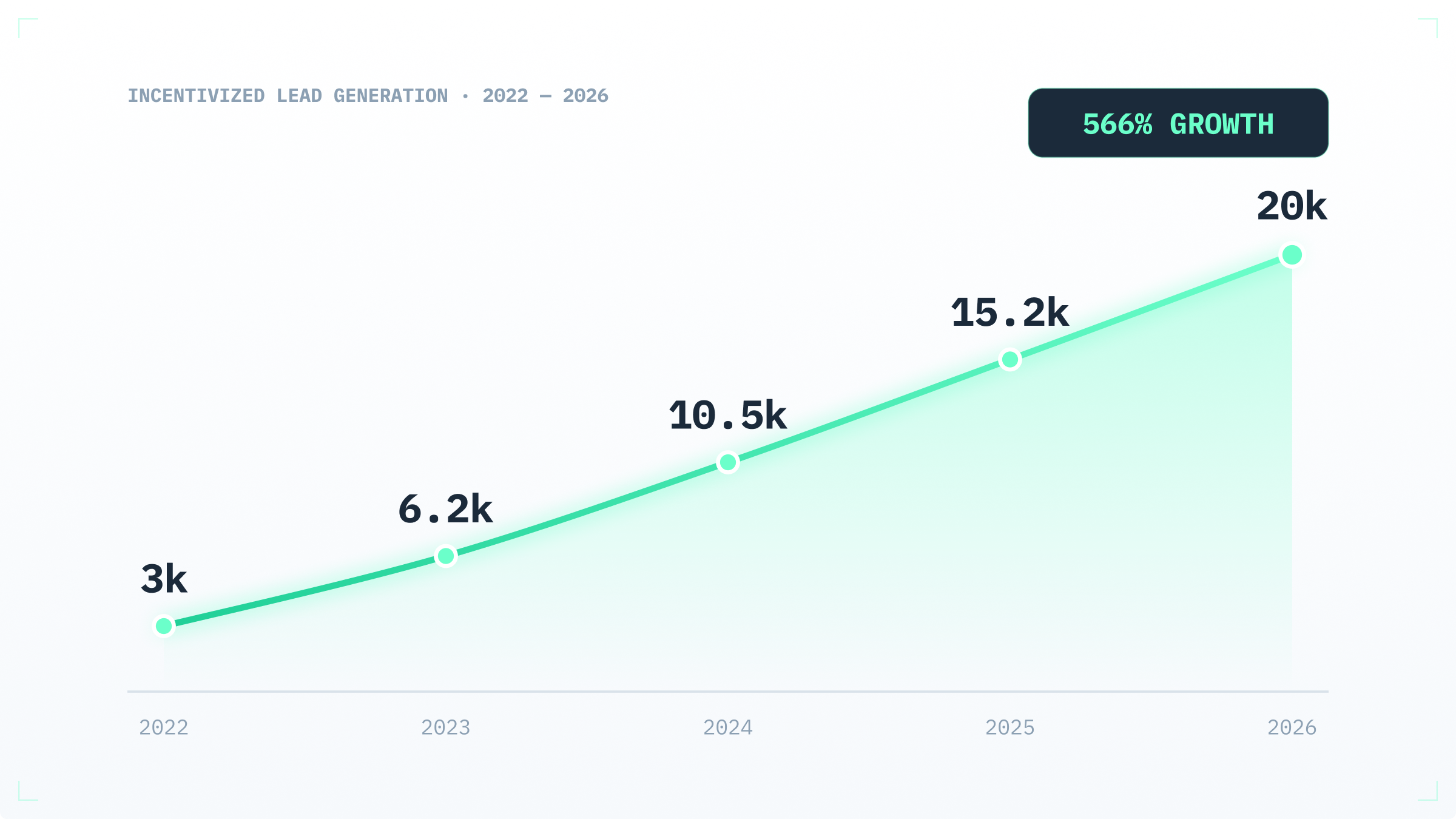
In 2022, roughly 3,000 incentivized demo ads were running on LinkedIn. Today that number exceeds 20,000.
That's a 566% increase in under four years — and the growth is still accelerating.
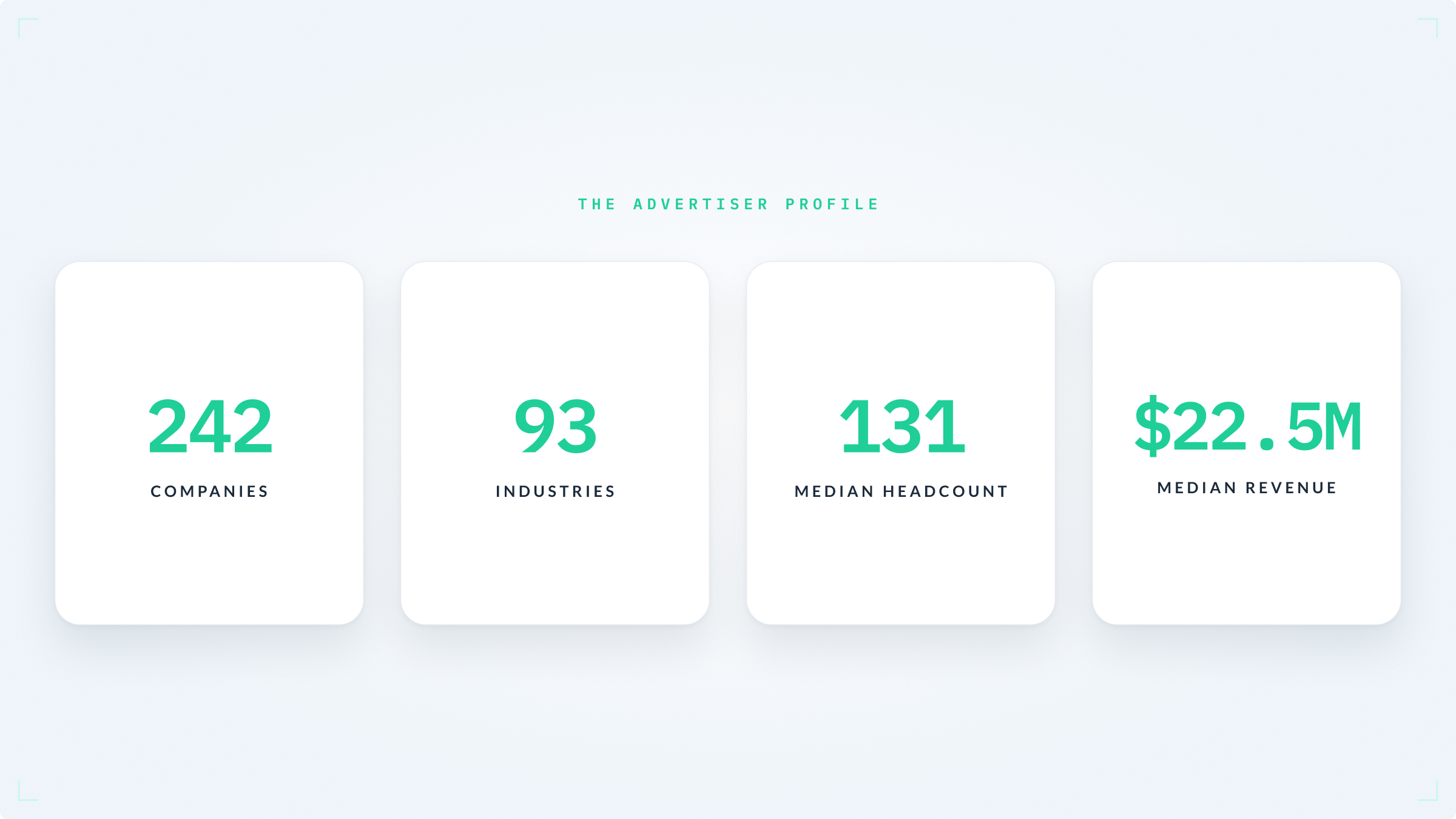
If you've scrolled LinkedIn recently, you've seen these ads: "Take a demo, take a $100 gift card." "Book a meeting, get an Apple Watch." Maybe you dismissed them as a gimmick. The data says otherwise. We spent June analyzing 2,180 active incentivized campaigns across 242 companies and 93 industries, and what we found is not a gimmick. It's a structural shift in how B2B companies build pipeline.
THE COMPANIES DRIVING THIS AREN'T FRINGE PLAYERS
The advertisers behind this growth are Rippling, BILL, BambooHR, Paystand, Cresta, Starburst, and Airwallex — established, well-funded B2B companies with real pipeline accountability. They've made a deliberate decision: offering a decision-maker a tangible reward for their time is one of the most effective ways to get a qualified buyer into a sales conversation.
These are companies with sophisticated marketing teams and rigorous CAC math. They aren't running 20,000 ads because it feels clever. They're running them because the math works.
WHY NOW? THE OLD PLAYBOOK IS FAILING EVERYWHERE AT ONCE
The traditional demand generation playbook is losing effectiveness across every channel simultaneously. Cold email reply rates are declining. LinkedIn InMail response rates are compressing. Paid search is expensive and commoditized. Content marketing takes months to compound.
The incentivized demo solves a fundamental problem all of those channels share: it gives a qualified buyer a guaranteed, tangible reason to say yes before they've decided whether your product is relevant to them.
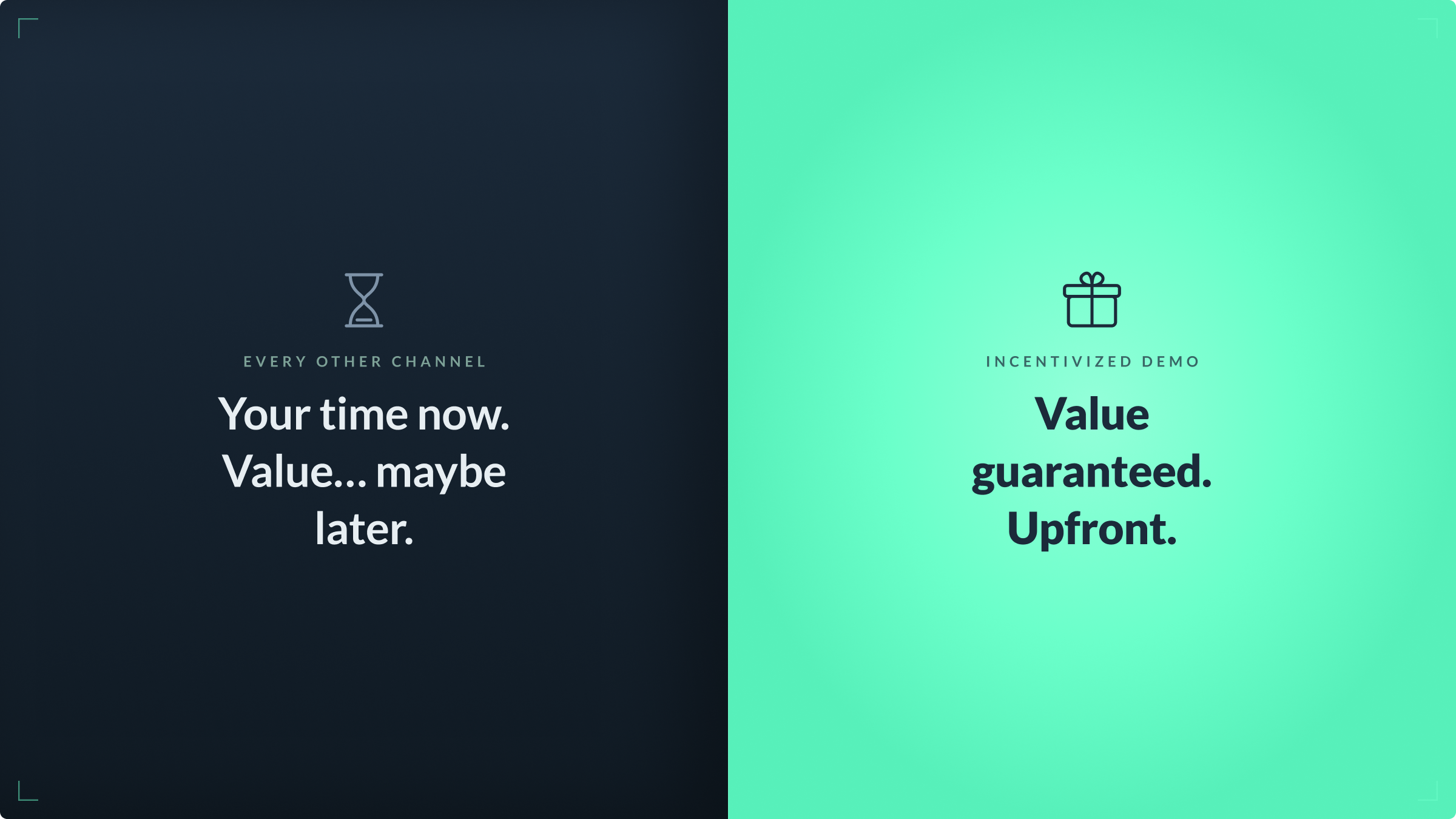
Think about what every other channel asks of a prospect: give us your time and attention now, and maybe you'll get value later. The incentivized model inverts it. The value is guaranteed upfront. The reward acknowledges that the buyer's time has measurable worth — and recognizes that worth explicitly before asking them to spend it.
Every professional-services engagement already does a version of this (the courtship dinner, the free audit, the paid pilot). The incentivized demo is simply the most direct and transparent version of it in B2B demand generation.
WHAT THE NUMBERS LOOK LIKE
A few headline findings from the full analysis:
— 20,000+ active incentivized demo ads are running on LinkedIn today, up from ~3,000 in 2022.
— 242 companies across 93 industries are actively running these campaigns.
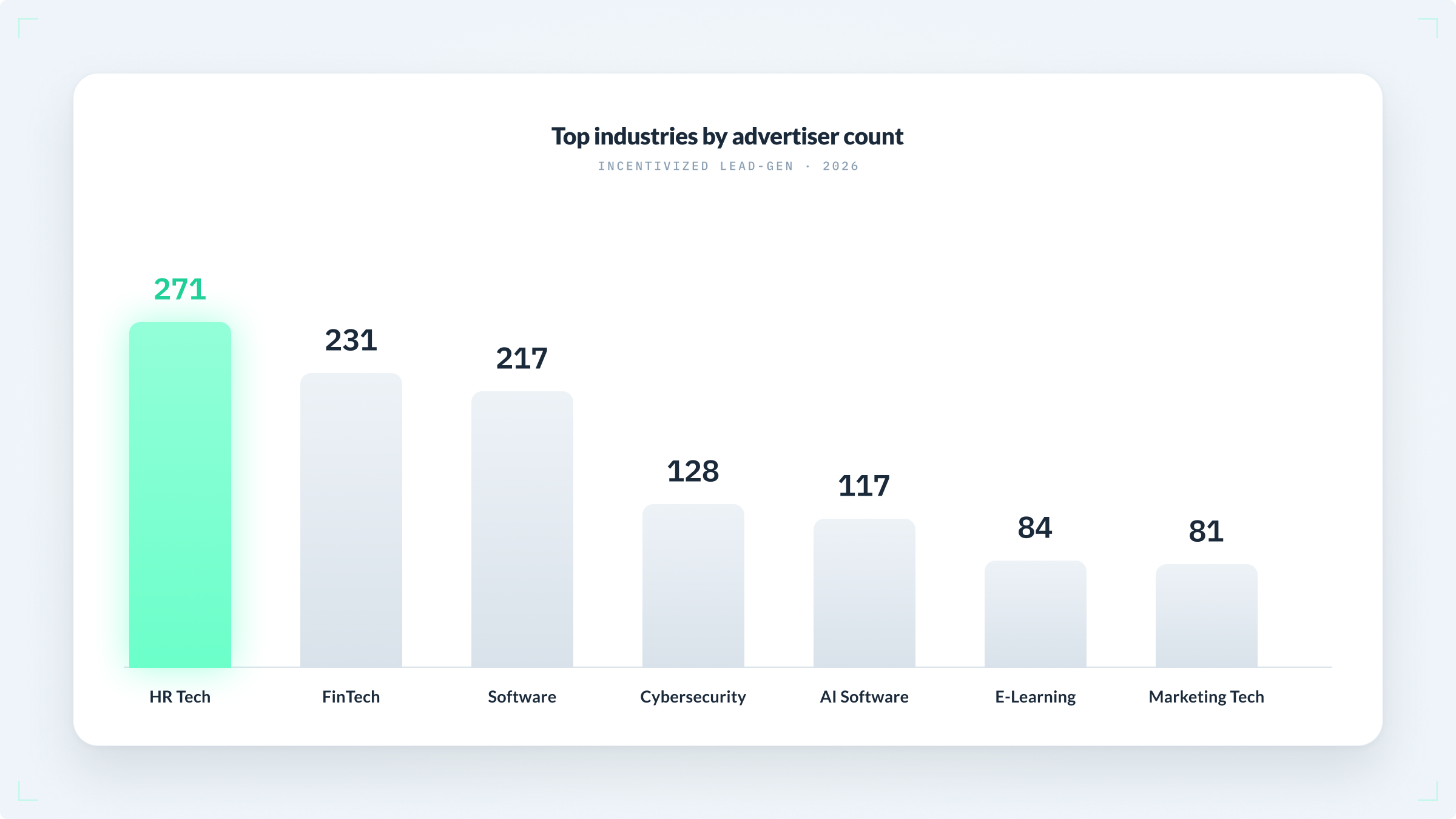
— HR Tech leads adoption with 271 active ads, followed by FinTech (231), Software (217), Cybersecurity (128), and AI Software (117). These categories share two traits: decision-makers who are hard to reach through conventional outbound, and customer lifetime values that make $100–$250 acquisition costs completely rational.
— $100 is the market-standard incentive — 41.2% of ads offer exactly that amount, which creates its own problem (more on that in a coming post).
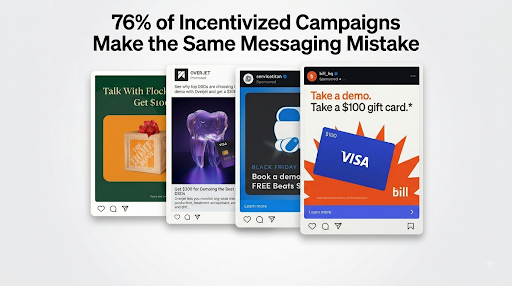
— 76% of campaigns still lead with the product instead of the meeting — the single biggest messaging gap in the channel, and the subject of week four in this series.
THE CHANNEL VALIDATED ITSELF. EXECUTION HASN'T KEPT PACE.
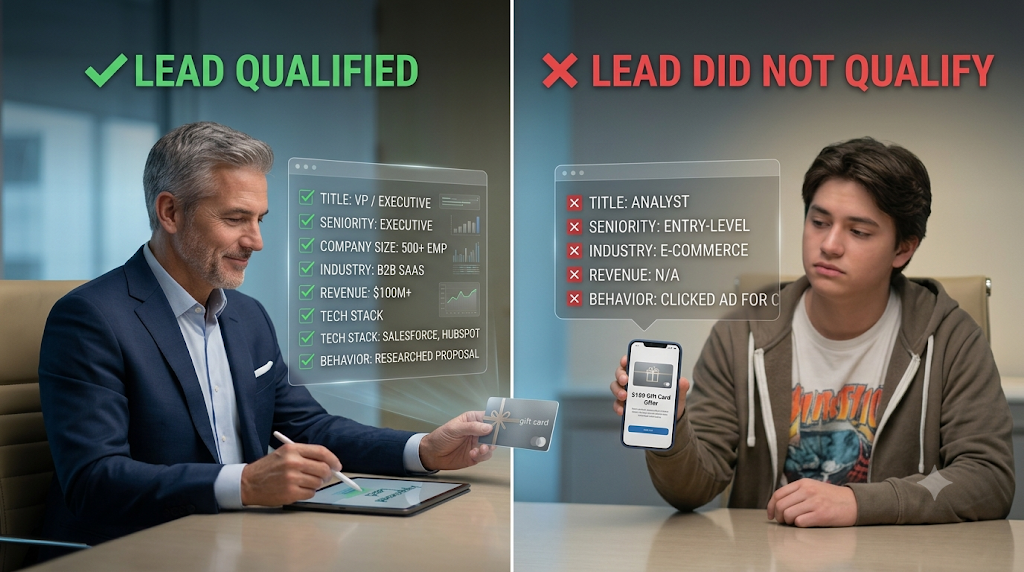
Here's the tension the data reveals: the channel works, but most of the market is running it badly. Campaigns launch, generate more leads than manual operations can handle, and pause by day 10. Gift cards get harvested by incentive hunters mining public ad libraries. Reps walk into meetings knowing nothing but a name and a company. The same $100 Amazon card gets offered by a dozen vendors to the same buyer in the same week.
The companies waiting to evaluate this channel are watching their competitors build pipeline from it in real time. The companies already in it are mostly leaving results on the table.
Over the next 13 weeks, we're publishing everything we learned — the eight elements that separate high-performing incentivized campaigns from expensive noise, teardowns of the best advertisers in the space, and the qualification systems that turn reward-seekers into revenue.
GET THE FULL REPORT
The complete analysis — all six market insights, the eight-element operating model, firmographic profiles of all 242 advertisers, and creative teardowns — is free to download: The State of B2B Incentivized Lead Generation on LinkedIn (2026).